Magda proves commercial diet programs are a waste of money.

By | Big Fat Lies, Sugar | 5 Comments

According to the Australian Women’s Weekly actress and comedian Magda Szubanski was paid $32,692 per kilo to lose 26 kilos in 2009 ($850,000). It appears the solution was temporary so now Magda is reportedly receiving $1.25 million to have another go.

Magda joins a long list of celebrities who’ve fallen off the Jenny Craig wagon. But continuous failure doesn’t seem to harm their brand at all. Indeed failure seems to sell more, Magda’s first attempt increased Jenny Craig sales by 307 per cent.

So, does Jenny Craig work (for people who are not celebrities)?

The Jenny Craig diet has been tested in only one randomised, controlled trial.  That is a little surprising (and dare I say, suspicious), given it is one of the largest diet programs in the world.

In this kind of trial, the participants are randomly assigned either to a group following the diet or a group not following the diet (the controls), and the progress of each group is directly measured against the other. The trial compared Jenny Craig with what they called a ‘self-help group’. The self-helpers were given information on losing weight and offered a follow-up counselling session with a dietitian, but otherwise left to their own devices.

The study was funded by Jenny Craig, who also provided all the meals and counselling sessions free of charge. Participants also had access to free weekly one-on-one counselling sessions with a Jenny Craig consultant. If they’d had to pay for all this luvin, it would have cost them $718 for the counselling and $6,240 for the food. Because of all these factors, the study is not a completely real-world example. Throw in $1,500 a month for a personal trainer and a million dollar pay day and you might almost replicate the experience of a celebrity dieter.

In the real world, we’re supposed to pay for the diet, not the other way around. Given that, this study probably represent the best possible scenario in terms of keeping people motivated and sticking to the diet for the entire length of the study, which was two years. Even so 9 per cent of participants had dropped out by the end.

After two years of free Jenny Craig meals, intense calorie restriction (the diets were between 42 and 68 per cent of their normal calorie intake) and weekly counselling, the average dieter managed to drop from 92.2 kilograms to 84.8 kilograms (which means they were still obese – in this trial defined as anything above 81 kilograms). Even the self-helpers managed to drop 2 kilograms!

The good news is that if you can convince Jenny Craig to pay for your food and weekly counselling (don’t hold your breath), you can expect to lose about 7 kilograms in two years. If you started out obese, you’d still be obese and you’d have been starving for two whole years but your pants might fit a little better.

And it seems this astounding lack of success is not a one-off observation.

A 2007 UCLA review of 31 credible long term weight loss studies found that most people on calorie restricting diets (such as that promoted by Jenny Craig and Weight Watchers) initially lost 5 to 10 percent of their body weight. But they also found that the majority of people regained all the weight (plus a bit more) within 12 months. Sustained weight loss was found only in a very, very small minority of participants.

Clearly Jenny Craig understand that since their diet doesn’t work very well, people need to be assured that their inevitable failure is something shared by the best and brightest (by that I mean celebrities, in case it wasn’t obvious).

All of this relies on the punter buying into the myth propagated by the Health and Diet industry that being fat is a character defect. They need us to believe that we put on weight because we are weak willed or lazy (or both). This means that any failure of a diet product is those character defects overcoming our willpower and not that the product was a load of rubbish.

This is, of course, utter nonsense. We are fat because we are addicted to a substance (sugar) which makes us fat. This addictive substance is embedded in everything we eat by the processed food industry so they can move more product (if they could use nicotine they would, but sugar will have to do). We are not fat because we are gluttonous or slothful (or any of the five remaining deadly sins).

If a product doesn’t actually work as promised and the company selling it knows this, then we are well on the way to outrageously unethical (if not downright immoral) corporate behaviour. But I won’t hold my breath waiting for any corporate regulator to do anything about it. Luckily we don’t have to. We have a choice. We can buy into the latest Jenny Craig (or any other diet program’s) weightless yo-yo. Or, we can just stop eating sugar.

Image by Eva Rinaldi from Sydney Australia www.evarinaldi.com (Magda Szubanski) [CC-BY-SA-2.0 (http://creativecommons.org/licenses/by-sa/2.0)], via Wikimedia Commons


The Bottom Line: why you should listen to your gut

By | Sugar | 8 Comments

One in every 250 Australians suffer from a severely debilitating disease but no-one (especially those who have it) dare to speak its name. The annual rate of new diagnoses has at least tripled since 1990 and hospitilisations caused by it have doubled in the last decade alone. This is a disease which is clearly out of control but the worst news is that it is likely to be just the proverbial canary in the coal-mine for much worse epidemics lurking in the background.

IBD (Inflammatory Bowel Disease) is chronic inflammation of the bowel and lumps together two main diseases, Ulcerative Colitis and Crohn’s Disease. IBD is a life-long condition that is generally first diagnosed between the ages of 15 and 40. The chronic inflammation results in recurrent bouts of abdominal pain, diarrhoea, vomiting, fever, weight loss and rectal bleeding.

Doctors are careful to distinguish IBD from IBS (irritable bowel syndrome). IBS is characterized by chronic abdominal pain, discomfort, bloating, and alteration of bowel habits but no bowel abnormalities are detectable using routine clinical testing. Evidence is however beginning to emerge that suggests that IBS may in fact be a low-level pre-cursor to IBD.

Needless to say, IBD has a significant impact on a sufferer’s emotional well-being and it’s something they generally like to keep very much to themselves. Most will suffer enormous discomfort for most of their lives and just try to soldier on. But a person experiencing a ‘flare’ of the symptoms requires near-continuous care. And hospitilisation and surgery is often required. In 2010, over 27,000 hospilitizations occurred for IBD treatment in Australia. A decade earlier there had been just 13,000.

IBD is caused by the body’s immune system attacking the bowel. The standard treatment is to prescribe anti-inflammatory (immune suppressing) drugs. Beyond that, the official position is that IBD is idiopathic (meaning we don’t know what causes it or therefore how to cure it other than by chopping out bits of inflamed bowel).

Our intestine is a glorious piece of machinery. Its job is to extract every bit of stuff we can use from whatever we shove in our gob and avoid any nasty bacteria while doing it. In order to perform this magic trick we have specialist filtering cells that extract the good stuff and drop it into our lymphatic system (fats) or our blood stream (everything else). To do this we need an enormous surface area in contact with potential food. If we uncrinkled it all, our intestine would have the surface area of a football field. With all that space to cover, our immune system naturally concentrates a lot of its resources on defending the parts of our gut responsible for absorbing stuff from the outside world.

We know that IBD is not an auto-immune disease. It is not the body attacking itself. It is our immune system reacting to a foreign body. That reaction, the inflammation response, is our body’s way of defending itself against agents of harm from the outside world.

One of the key shortcuts our immune system uses is to react viciously to something called endotoxins. An endotoxin is a key part of the cell membrane of some of the nastiest critters in the bacterial world. Cholera, Salmonella, Helicobacter (responsible for stomach ulcers and cancers), Legionella, Gonorrhea and Meningococcus are among the very long list of bacteria who carry endotoxins. So it won’t come as a surprise that our immune system goes on high alert when it spots an endotoxin in our bloodstream.

The correct number of endotoxins in our blood is zero. If the number in the blood stream is any higher than that then we know there is a problem with our gut. The gut is usually impermeable to endotoxins, but it can become ‘leaky’, that is, it can become more permeable to endotoxins and they can start to leak through into our bloodstream.

We know that three very common substances will cause our gut to become more permeable, fish oil, alcohol and fructose. Animal studies have convincingly shown fish oil to increase endotoxin leakage into the bloodstream. And animal and human studies have also shown that both acute bingeing and long term exposure to both alcohol and fructose will increase (up to 20-fold) the amount of endotoxin in our blood. Unfortunately both alcohol and fructose also appear to increase the populations of bacteria which produce endotoxins in our intestines (something charmingly termed bacterial overgrowth). So we get the double whammy of more endotoxins in our gut and doors left ajar (gut permeability) to let them into our bloodstream.

These endotoxins of course send our immune system into a killing frenzy which we experience as inflammation of the intestinal tract. We also know that just like any other inflammation response it is made worse if we are consuming too much omega-6 fats found in seed oils (vegetable oils).

Much more disturbingly, the inflammation response does not end at the intestine. First stop for portal blood after the intestine is the liver and there is convincing research which tells us that our inflammation response to endotoxins is what converts a ‘mere’ fatty liver (caused by overconsumption of fructose) to an inflamed fatty liver (steatohepatitis).  Worse than that, it is looking increasingly likely that our immune response to endotoxins is implicated in a raft of diseases associated with inflammation in other organs (such as the heart, pancreas and kidneys).

Alcoholic Fatty Liver Disease now affects 6,203 people but Non-Alcoholic Fatty Liver Disease afflicts a massive 5,538,677 Australians. Even more worryingly, up to 13% of Australian children now have this chronic liver disease. If those numbers are anything to go by, we’re bingeing an awful lot more on fructose (or fish oil) than we are on alcohol. So when we go hunting for the cause of the massive rise in IBD in Australia, I’d be looking in the breakfast cereal, health food and soft drink aisles a long time before I’d be checking out the bottle shop.

When we suffer the symptoms of IBS and quite possibly, eventually, IBD. It is our gut sending us a message. It is saying you are consuming too much fructose (or in rarer cases, alcohol or fish oil). It is the visible warning that far more scary things are going on in organs that don’t throw off symptoms (until it is way too late). So if you are getting those messages from your gut – listen.

IBD is a life sentence of debilitation. It won’t kill you but it will make every part of your life awful from your mid-teens onwards. The science suggests the fastest, bestest, way to avoid it is to not binge on fructose (or booze or fish oil). The only problem with that is that the processed food industry is lacing everything we eat with fructose and just for good measure chucking in a pile of seed oils (vegetable oils) loaded with omega-6 fats to ramp up our inflammation response. Pay attention to what you eat, or preferably construct it yourself from basic ingredients and you will be a long way towards not suffering the horror story which is IBD.

Image courtesy of Ambro / FreeDigitalPhotos.net

Is 16 cents a loaf worth filling our bread with cancer causing oil?

By | Vegetable Oils | 19 Comments

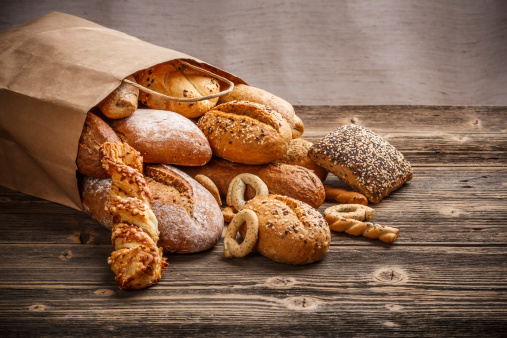
Most of our kids like a bread roll to munch on at school.  The trouble is, it’s slightly easier to find discarded money in the average supermarket than it is to find bread or bread rolls made without ‘Vegetable Oils’.  It’s perfectly possible to make bread using Olive Oil or even (gasp – don’t even think it) animal fat.  But nobody does.

When you decide you no longer wish to consume ‘Vegetable Oils’, bread presents a bit of a problem.  Almost all breads sold in Australian supermarkets are made with canola oil, sunflower oil or soybean oil (or sometimes all three).  And that even includes the ones in the Fresh Bakery bit of most of them.

So the cheap options are out straight away.  But even before you reconcile yourself to going top shelf at the bakery you won’t find an abundance of options.  Sure, you can get the fancy European bread range at Baker’s Delight (which doesn’t use any kind of fat).  But if you’re buying for 6 kids, that gets really expensive, really fast.  If you want ordinary old white bread there, at Brumby’s or at most bakeries, you’ll find ‘Vegetable Oils’ are the fat du jour.

As a result we had reconciled ourselves to buying outrageously expensive bread (we make our loaf bread at home) for the foreseeable future, until one day we had a bright idea.  Why not just ask the local bakery if they could do a batch of bread rolls and use olive oil instead.  To our complete and utter amazement, the Brumby’s we asked agreed to do it as long as we gave them a day’s notice and ordered at least 30.  Figuring 30 was about a week’s worth and they probably freeze well, we immediately ordered a batch.

They were manna from heaven.  Normal hamburger rolls that tasted exactly the way they should but without toxic oils. They froze perfectly and, if anything were better after being thawed than before.  Our problems were solved – until we went to pick up our next batch.  Brumby’s had decided in the interim that it was too much hassle to do a separate batch and point blank refused to do it again.  Bugger.

Plan B was to approach Baker’s Delight and they were delightful indeed.  Not only are they happy to do it, they’ll do it in whatever quantity we want as long as we give a day’s notice.  Now we pick up our 30 hamburger rolls every Sunday and not a single canola flower was harmed in their manufacture.  They cost exactly the same as the bog standard toxic variety but ours come with olive oil instead.

Now you might think I’m getting my undies in a twist over nothing.  The average bread contains something less than 1g of omega-6 fat per 100g if it’s made with canola oil.   But omega-6 fat consumption is an insidious thing and the effect is cumulative.  It’s in everything and frankly there are some times when you can’t avoid it.  So my theory is that if you can avoid it, even in the smallest way, they you should definitely take that option.

If you agree, then all you need to do is ask, you might be surprised at the answer.

All this does of course cause me to wonder why Bakers don’t just use Olive Oil all the time.  Not even the most rabid supporter of vegetable oil, the National Heart Foundation has any problem with us consuming the old olive juice, so it can’t be for health reasons (not that I’ve ever seen a bakery make a health claim about the oil it uses anyway).  So that just leaves cost.

According to my local catering supply shop, I can get a 20 Litre tin of Canola oil for $45.95, but that much dosh will only buy be 4 Litres of Extra Virgin Olive Oil (I’m giving them the benefit of the doubt and assuming that’s what they’ll be using).

I can see that an ingredient costing 5 times as much might give pause for thought, but only if it were being used in significant quantities.  A loaf of bread weighing 700 grams will contain about 15 grams (16 mls) of fat.  If that fat is canola oil it will cost 4c.  If it’s Olive Oil, it will cost 20c.  Yes it’s more, but in the almost $4 price of a loaf of bread at the local bakery, it really is irrelevant.  And if it is likely to break the bank, then, what the heck, add 16c to the price of the loaf for me.

Are we really being sold bread full of vegetable oil for the sake of 16c a loaf in oil?  And the trade off for that is bread that (in combination with the rest of the processed food we eat) significantly increases our risk of cancer, macular degeneration, rheumatoid arthritis and life-threatening allergies.  Come on bakeries of Australia, surely that’s not worth the 16c.  Put the Olive Oil back in our bread.

Image courtesy of stockimages / FreeDigitalPhotos.net

Should we de-fund ‘private’ schools?

By | Education, Media, Television | No Comments

In 2011-12 Australian governments spent a tad over $47 billion on running the country’s schools. But only three quarters of that went to government owned schools. The remaining $10 billion or so went to ‘private’ (catholic and independent) schools. Governments are not normally big fans of throwing public money at private choices, but when it comes to schooling, the purse is well and truly open.

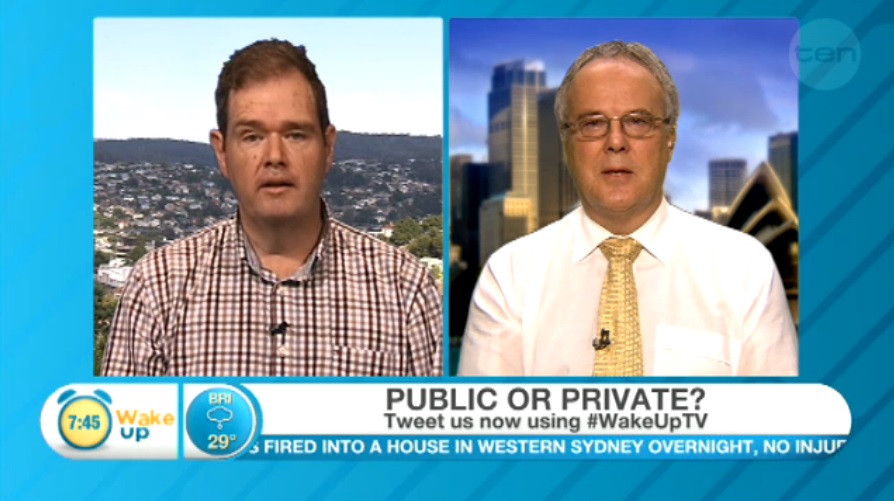
I recently had a chat on air with Dr Timothy Hawkes, Headmaster of The Kings School about whether Australian taxpayers should be footing the bill for ‘private’ schools.

Click Here to watch the recording.

Tide of inequity to blame for falling education results

By | Education | One Comment

Education is a very big line item in State and Federal Budgets. And, thanks to incessant demands for smaller classes, it is getting bigger at an astounding rate. But rather than address the obviously impaired state of our education system, the Government’s plan is to send you the bill.

In 2011-12 Australian governments spent a tad over $47 billion on running the country’s schools. But only three quarters of that went to government owned schools. The remaining $10 billion or so went to ‘private’ (catholic and independent) schools. Governments are not normally big fans of throwing public money at private choices. If I hire a security guard because the local coppers are not doing the job to my liking, a request for funding from the government will fall on deaf ears.

Joe Hockey may think the age of entitlement is over, but when it comes to funding private educational institutions it is anything but. The average Australian ‘private’ school kid costs the taxpayer about 60% as much as they would if were in the other kind of government school.

From the government’s perspective that’s a great thing. And it’s getting better all the time. Australians are stampeding from state run schools.  But the enormous growth in non-government schools has not been spread evenly. The average growth of the sector over the 15 years between 1998 and 2013 was 30%. But the number of students attending Islamic schools tripled and the schools aligned under the banner of the CSA (Christian Schools Australia) exploded to over 55,000 students in 2013.

The parents rushing out of the public sector are not choosing an Anglican Grammar school or even the local Catholic, they are choosing small, strongly faith based, low fee, suburban independents. Anyone would think we had all suddenly become devoutly religious, but the research suggests that couldn’t be further from the truth.

In 2008, the ISCA (Independent Schools Council of Australia) commissioned a study to get to the bottom of why parents chose a ‘private’ school. The answers were (in order) ‘educational excellence, good teachers, a supportive environment and good facilities.’ Religion barely scored a mention at all.

The flipside to that survey is of course that parents think they will not be getting those things from a public school. Massive increases in teacher numbers (because of reductions in class size) since the 1970s, combined with significantly greater employment choices for women has meant that the academic aptitude of the average teacher has steadily declined. Over the same timeframe, the unionisation of the teaching workforce has meant that should a teacher be hopeless, there is nothing anyone can do about it.

Independent schools have more flexibility when it comes to hiring and firing teaching staff. And they play off that in their marketing to parents worried about dud teachers.

The better facilities are paid for using a fair chunk of the fees that the parents are paying (since the government is still picking up most of the cost for the actual education).

Because such a large proportion of government education spending is diverted to fund private choices, the public schools become progressively more and more decrepit. And so the vicious cycle continues.

If you love the purity of markets, then I suspect you will be saying ‘so what?’ You might be thinking the push to ‘private’ education is a good thing. The problem is that in Australia we already know how this story ends. And it doesn’t end well.

In the middle of the 19th century almost all our education was publicly funded but delivered by churches. The result was a massively unequal society. Some communities were significantly overserviced, with schools competing with each other for the best students and those students receiving the very best education available. Other communities had a choice of just one school and most of the population had no access to schooling at all.

The solution was to bring in free mandatory secular education for all and to immediately de-fund the ‘private’ sector. By the start of the 20th century, Australia was a shining beacon to the world. It had a high equity, high performance education system which anyone and everybody could and did access.

But we are on the fast train to inequity again. And as the studies have predicted, the more the tide of equity sinks, the worse our education results as a nation become.

Running away from the public system is not the solution to Australia’s education woes. It simply drives wedges into cracks in Australian society and replays the disaster movie our education system has seen once before. Any government that encourages that as a solution is looking after its bottom line not your child’s future.

This post also appeared in the Sydney Morning Herald

Why won’t Sydney University retract the Australian Paradox paper?

By | Sugar | 8 Comments

Three years ago a Professor from Sydney University published a paper which she claimed exonerated sugar as a cause of obesity in Australia. It has been widely promoted by the processed food industry.  But from the very beginning it was obvious that there were serious problems with both the evidence relied upon and the conclusions reached. So far the University has failed to remove the paper and continues to drag its feet. Why?

In May 2010, the DAA (Dietitians Association of Australia) announced that Dr Alan Barclay, Head of Research at the Australian Diabetes Council had discovered that sugar could not be blamed for Australia’s obesity crisis.

‘Much to everyone’s surprise, it looks as if, unlike in the US, sugar is not the culprit here – or in the UK or Japan,’ said Dr Barclay while commenting on the study he had just completed with co-researcher Alicia Sims. He based this conclusion on his discovery that consumption of sugar had declined by ‘nearly 20 per cent’ since the early 1970s.

After this, the research was frequently wheeled out to rebut anyone who dared to suggest that sugar may indeed be the culprit. One example appeared in the Sydney Morning Herald in July 2010 when one of my books about the dangers of sugar was critiqued by Jennie Brand-Miller a professor of human nutrition at the University of Sydney.

Brand-Miller argued that Australia’s consumption of sugar has ‘actually decreased by about 23 per cent over the past 30 years. That to me blows David Gillespie’s hypothesis out of the window,’ she said.

Brand-Miller was apparently so impressed by Barclay’s findings on sugar consumption that she became the lead author of the paper by the time it was eventually published in 2011.

The paper on Australia’s paradoxical decline in sugar consumption (paradoxical because elsewhere in the world sugar and obesity rise together but here apparently they don’t) finally saw the light of day in a little known online-only journal called nutrients. Brand-Miller was the guest editor for the issue in which the paper appeared.

As you might expect, those with a buck to make from flogging sugar have leapt upon the (now published) paper with glee.

When the AFGC (Australia’s peak processed food lobby group) argued against a change to the Healthy eating guidelines which would restrict sugar consumption, they relied on the paper. When Kellogg’s wants to convince us that the sugar content of Breakfast cereal is not a problem, they rely on the paper. When Pepsico, Coca-cola or the Australian Beverages Council want to convince us that sugar doesn’t cause diabetes or obesity they rely on the paper. And of course the US, Canadian and Australian sugar associations cite it regularly.

Perhaps a little more surprisingly both the DAA and the National Heart Foundation have, in the past, also relied heavily on the paper’s findings to combat any suggestion that sugar consumption is a serious cause for concern.

Very early on, the constant assertion of the existence of an Australian Sugar Paradox happened to catch the eye of a former Reserve Bank economist, Rory Robertson. He had spent most of his life studying economic data and charts – including on commodity consumption and production – and the statement that Australia is eating less sugar now than it did in the 1970s just didn’t ring true. He made a few calls and quickly discovered that some of the data used by the paper was, to put it bluntly, made up (by the FAO – the United Nations Food and Agriculture organisation). It seemed that was necessary because the Australian Bureau of Statistics no longer collected information about sugar consumption, but the FAO still needed to produce a sugar consumption report.

Alerted to the possibility that there were serious problems with the paper, Robertson dug further and began to discover glaring errors and other concerns. For example a graph which showed a 30% increase in sugary drink consumption was described by the authors as showing a 10% decline. And both Brand-Miller and Barclay had failed to mention that the ‘not for profit food endorsement program’ (disclosed in the paper), with which they are both involved, receives payments from CSR (a large retail sugar vendor) and other companies selling foods high in sugar.  I’m sure those payments didn’t influence Brand-Miller and Barclay’s research at all but the potential for conflict should have been disclosed.

Robertson raised his concerns with the authors and the journal to no avail. Frustrated by the refusal to acknowledge obvious errors, in March 2012, he contacted Sydney University’s Deputy Vice Chancellor, Research, Dr Jill Trewhella.  He was swiftly told that his complaints were ‘potentially defamatory’ and that the best avenue of redress was to publish a paper of his own.

Robertson decided instead to campaign to have the paper removed from the public record. His logic was simple. The paper may be error riddled and published in an obscure online-only journal but it punches way above its weight. It is used extensively to undermine any suggestion that sugar consumption is dangerous and it lends the hard won credibility of Sydney University (and the Diabetes Council of Australia) to its clearly inappropriate claims. He felt that simply rebutting it in a journal would not stop it doing harm. It needed to be expunged from the academic record.

Rory is nothing if not persistent. And it appears that Dr Trewhella is finally acting on his concerns. In November 2013, she announced that she had appointed an investigator to ‘conduct an initial inquiry’ the aim of which is to determine if ‘a prima facie case has been established’ in relation to Rory’s complaints.

But now more than 10 weeks have passed and there is still no word from Sydney University as to the outcome of its investigation. It shouldn’t be that hard. The Paradox paper contains obvious errors (such as the 10% increase debacle discussed above) which go to the core of its claim of decreasing sugar consumption. And at least one of those errors has been acknowledged as recently as last Sunday by Brand-Miller in response to questioning by ABC Background Briefing reporter Wendy Carlisle.

But something else makes the investigator’s task even easier. A peer reviewed paper has been published by the University of Western Australia which explicitly states that having analysed the paper and its conclusions, there is no Australian Paradox (because Australian sugar consumption is ‘substantially increasing’). It couldn’t be more black and white if it were a Zebra.

The Australian Paradox paper is, at best, incompetent. There is no justification for its continued existence. Every day that it remains on the public record, it is being used as ammunition by the processed food industry, Sydney University’s reputation as a premier university is being tarnished and the science of human nutrition is being ridiculed.

It’s time for the University to stop pussy-footing around and do what needs to be done. Retract the paper. Prolonging the embarrassment does not make it less embarrassing.

New Sugar Guide available in the Resource Store

By | Sugar | No Comments

The 2014 Low Fructose Guide to Australian Breads lists the 10 best and 10 worst breads on sale in Australia today (from a sugar content perspective). It also contains a separate section for gluten and wheat free offerings and a comprehensive listing of the sugar content of over 220 supermarket breads and larger bakeries (such as Baker’s Delight).

Get yours today by visiting the Resource Store.

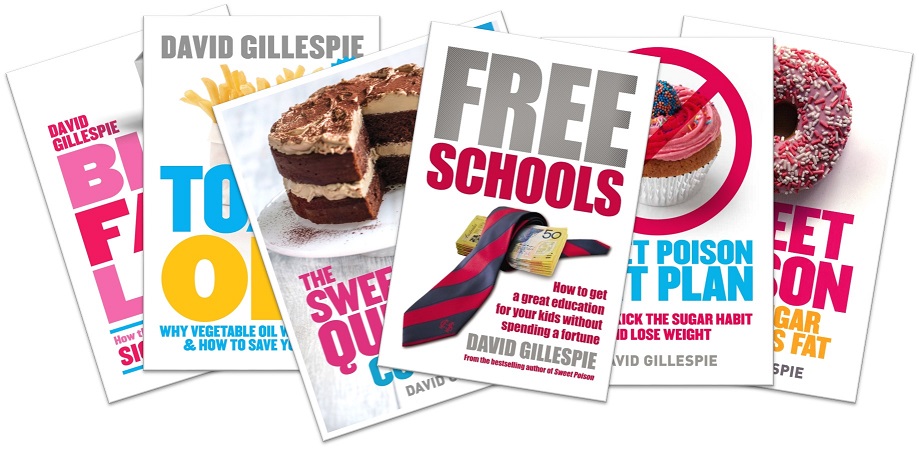
Buy David’s Books

By | Books, Cookbook, Education, Recipes, Sugar, Sweet Poison, Vegetable Oils | 6 Comments

All of David’s books are available from this site. And each book purchased is personally signed by David. If you buy multiple copies of books you will receive multi-buy discounts and keep an eye out for sugar themed or oil themed bundles which also offer great discounts.

All of the books are also available electronically (obviously those aren’t signed).

In addiction to the books there is a great range of electronic resources (such as guides to the sugar content of common foods) available in the Resource Store.

The Books

 Free Schools Cover Small
Free Schools

David Gillespie has six kids. When it came time to select high schools, he thought it worth doing some investigation to assess the level of advantage his kids would enjoy if he spent the required $1.3 million to send them all to private schools.

Shockingly, the answer was: none whatsoever.

Buy Now Find out more
 bk_sweet_poison_cookbook
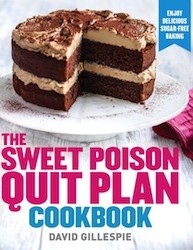
The Sweet Poison Quit Plan Cookbook

Ex-lawyer and ex-sugarholic, David Gillespie, revolutionised the lives and eating habits of thousands of Australians with his bestsellers on the dangers of sugar, Sweet Poison and The Sweet Poison Quit Plan. To help get us unhooked from sugar, David with the help of wife Lizzie, gave us recipes for sweet foods made with dextrose-pure glucose, a healthy alternative to table sugar. Here, David has worked with a chef to develop more delicious fructose-free recipes.

All proceeds from the sale of this book are donated to charity

Buy Now Find out more
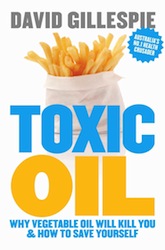
 bk_toxic_oil
Toxic Oil

“‘Vegetable’ oil makes you exceedingly vulnerable to cancer. Every extra mouthful of vegetable oil you consume takes you one step closer to a deadly (and irreversible) outcome.”With these words David Gillespie begins his follow-up to the bestseller Big Fat Lies: How the diet industry is making you sick, fat & poor. In Big Fat Lies he analysed the latest scientific evidence to show us that vegetable oils, specifically seed oils, are dangerous to our health, despite that fact that they are recommended by government health agencies.

Buy Now Find out more
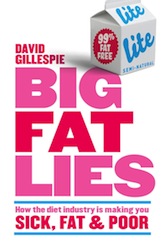
bk_big_fat_lies
Big Fat Lies

In Big Fat Lies David explodes the myths about diet, exercise and vitamin supplements, examining the latest scientific evidence and exposing the role the multibillion-dollar food, health and diet industries have played in promoting the health messages we follow or feel guilty about not following.

Buy Now Find out more
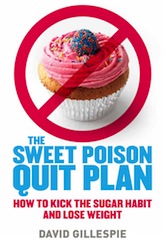
bk_quit_plan
The Sweet Poison Quit Plan

Packed with reader anecdotes and lists to help you organise your sugar-free life, this book presents one of the most accessible and achievable strategies around for losing weight and avoiding some of the more pernicious lifestyle diseases that are increasingly associated with excessive sugar consumption. Gillespie is an informed and entertaining writer who makes his subject fascinating, and inspires with his passion and logic.

Buy Now Find out more
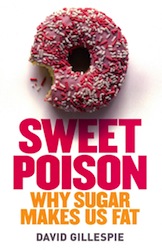
bk_sweet_poison
Sweet Poison

The #1 Bestseller, Sweet Poison exposes one of the great health scourges of our time and offers a wealth of practical and accessible information on how to avoid fructose, increase your enjoyment of food and lose weight.

Buy Now Find out more

Smoke Points

By | Vegetable Oils | 2 Comments

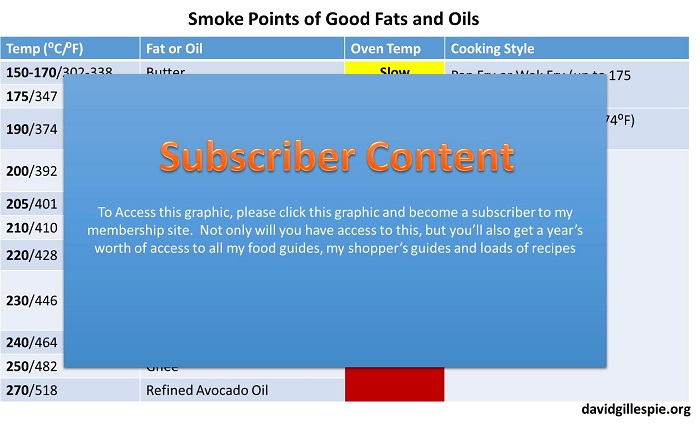
Smoke point sub 700

In the graphic, I’ve set out the typical smoke points for the good oils and fats you might be cooking with.  Remember these are rough numbers as each brand will get a slightly different result. But using this table you should be able to figure out the best oil to use for various types of cooking.  To get access to this graphic, become a member.  You’ll also get access to loads of other premium content, such as recipes, detailed guides to sugar content and handy calculators to help you show for low seed oil foods.